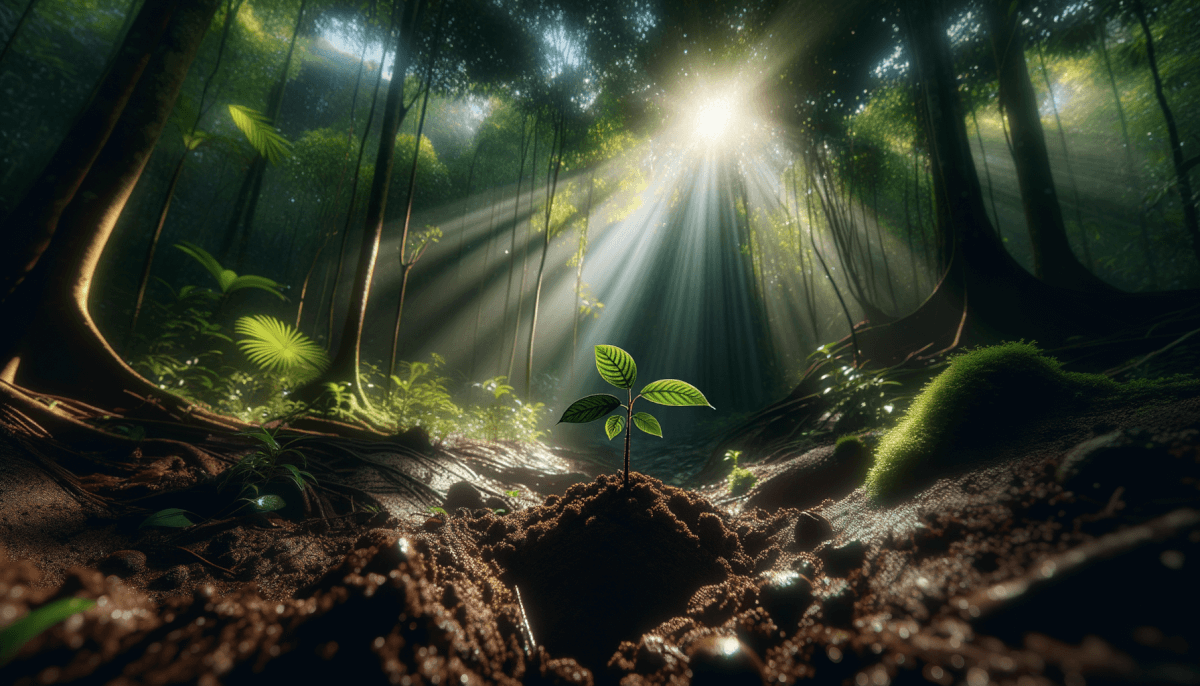
Chlorophyll: Exploring the Science Behind Why Leaves Are Green
CREATED BY DAVINA FARRER Published: 21/04/2026 @ 09:00AM #GreenLeaves #Photosynthesis #Chlorophyll #PlantEnergy #SunlightConverts
Have you ever wondered why leaves are green? The answer lies in the process of photosynthesis. Plants use sunlight to convert carbon dioxide and water into energy. This miraculous process is made possible by chlorophyll, a pigment found in the chloroplasts of plant cells ...
Chlorophyll dances, Capturing sun's golden rays, Nature's green magic
Photosynthesis is the process by which plants algae and some bacteria convert sunlight into energy. This energy then fuels the growth and development of the organism. The key players in this process are chlorophyll molecules, which capture sunlight and convert it into chemical energy.
Chlorophyll is a green pigment found in the chloroplasts of plant cells!
It gives plants their green colour and is crucial for photosynthesis. This pigment absorbs sunlight and uses its energy to split water molecules into hydrogen and oxygen. The hydrogen is then combined with carbon dioxide to produce glucose, the main source of energy for plants.
The discovery of chlorophyll and its role in photosynthesis can be traced back to the 19th century. During this period, scientists began to study the process of plant growth. However, significant breakthroughs in understanding chlorophyll and photosynthesis were not made until the 20th century.
One of the most important discoveries was made by scientists Melvin Calvin, Andrew Benson and James Bassham in the 1950s. They were able to trace the path of carbon in photosynthesis. This led to the understanding of the Calvin cycle. The cycle is a series of chemical reactions that take place in the chloroplasts to convert carbon dioxide into glucose.
In the 1960s another major discovery was made by scientist Robert Emerson!
He found that plants have two types of chlorophyll, known as chlorophyll a and chlorophyll b. These two pigments work together to absorb different wavelengths of sunlight. This allows plants to maximise their energy production.
Further research in the 20th century also revealed that chlorophyll is not the only pigment involved in photosynthesis. Other pigments such as carotenoids and phycobilins also play a role in capturing sunlight and transferring its energy to chlorophyll.
The advances in technology and scientific techniques in the 20th century allowed scientists to study the structure of chlorophyll in more detail. They discovered that chlorophyll is made up of two parts: a hydrophobic tail and a hydrophilic head. This unique structure enables chlorophyll to interact with both water and sunlight. It is therefore an essential component of photosynthesis.
In addition to its role in photosynthesis, chlorophyll offers many other benefits for plants. It helps protect them from harmful UV radiation. It also acts as an antioxidant, protecting against damage from free radicals. Furthermore, chlorophyll plays a role in the regulation of plant growth and development.
The importance of chlorophyll in photosynthesis and plant growth cannot be overstated. Without this pigment, plants would not be able to produce their own food and sustain life on Earth. The discoveries of the 20th century have greatly enhanced our understanding of these processes.
They have opened new avenues for research and development in the field of plant science!
The green colour of leaves stems from chlorophyll, a pigment essential for photosynthesis. Discoveries in the 20th century have significantly expanded our understanding of this process. These advancements have illuminated the complex mechanisms of chlorophyll.
With ongoing research, we can further explore the mysteries of photosynthesis and develop a deeper appreciation for nature's wonders.
Until next time ...
DAVINA FARRER
Would you like to know more?
If anything I've written in my blog post resonates with you and you'd like to discover more of my thoughts about Chlorophyll and why leaves are green then do feel free to connect with me on Linkedin as I love to meet like-minded individuals with the same passions as myself.
I’ve always believed life is too short to sit still and wait for “someday.” From travelling the world in my twenties to taking on challenges like long-distance coastal walks, I’ve built a life around adventure, freedom, and making the most of every opportunity that comes my way.
After becoming a mum, I wanted a way to be present for my family while still creating an income and future for myself. That led me to build a flexible, residual income business that fits around real life - not the other way round. Today, I help others do the same, showing them how to reduce their bills and create more choice with their time.
For me, it’s not just about money - it’s about freedom. Freedom to travel, take on new challenges, and be there for the moments that matter most. If you’re looking for a way to create more flexibility, more income, and more life in your days, you’re in the right place.
Most contact databases start as simple address books containing names, emails, and phone numbers. The real power lies in customising data to match how ...
Keeping track of your accounts is a science as well as an art form. Yes, of course you can do it yourself, but wouldn't a bookkeeper make your life a ...
HMRC has seen a sharp rise in reports of winter fuel payment scams, with pensioners being warned to ignore messages requesting repayments or bank deta ...
For many small business owners, staying visible online feels like a full-time job. There's constant pressure to post on social media, keep websites up ...
All content on this blog, including but not limited to text, images, videos and audio, is protected by copyright. No part of this blog may be reproduced, copied, distributed, or otherwise used without the prior written consent of the author. Unauthorised use constitutes a breach of intellectual property rights.
Please note that many elements of this blog have been created using Artificial Intelligence (AI). As such, content may not always reflect verified facts or professional advice. The information provided is for general interest only and should not be relied upon as a sole source for making decisions, financial or otherwise. Readers are strongly advised to seek independent advice from qualified professionals appropriate to their country and situation.
The author of this blog, YourPCM Limited, and its directors, employees, and authorised agents accept no liability for any loss, harm, or consequence arising from the use or interpretation of content found on this site.
The sblogit.com platform is provided on an “as is” basis. By continuing to view or interact with this blog, you acknowledge and accept these terms. If you do not agree with any part of this notice, please cease using this site immediately.
YourPCM Limited is a company registered in the UK and operates exclusively under the jurisdiction of the laws of England and Wales.